Free shipping

for orders over €60
Free shipping
for orders over €60
Free shipping
for orders over €60
If you try kombucha for the first time, you’ll likely wonder exactly what you’re drinking. It has a bit of tea, a bit of sparkling beverage, and a distinctive acidity that sets it apart. Perhaps that’s why it has gained such a large following in recent years.
It doesn’t really resemble any other beverage, and every sip offers a different experience. Whether you’ve discovered it recently or you’re seeing it more and more around you, kombucha is a drink that has managed to capture the interest of millions of people worldwide.
Although kombucha has become particularly popular in recent years, its history dates back more than 2,000 years.
The first references come from ancient China, where fermented beverages were part of everyday life. From there, it spread to Japan, Russia, and later to Europe.
Over the years, each region adapted the beverage to its own taste preferences. However, the basic production process remained the same.
Today, kombucha is consumed in dozens of countries and is considered one of the most popular functional beverages worldwide.
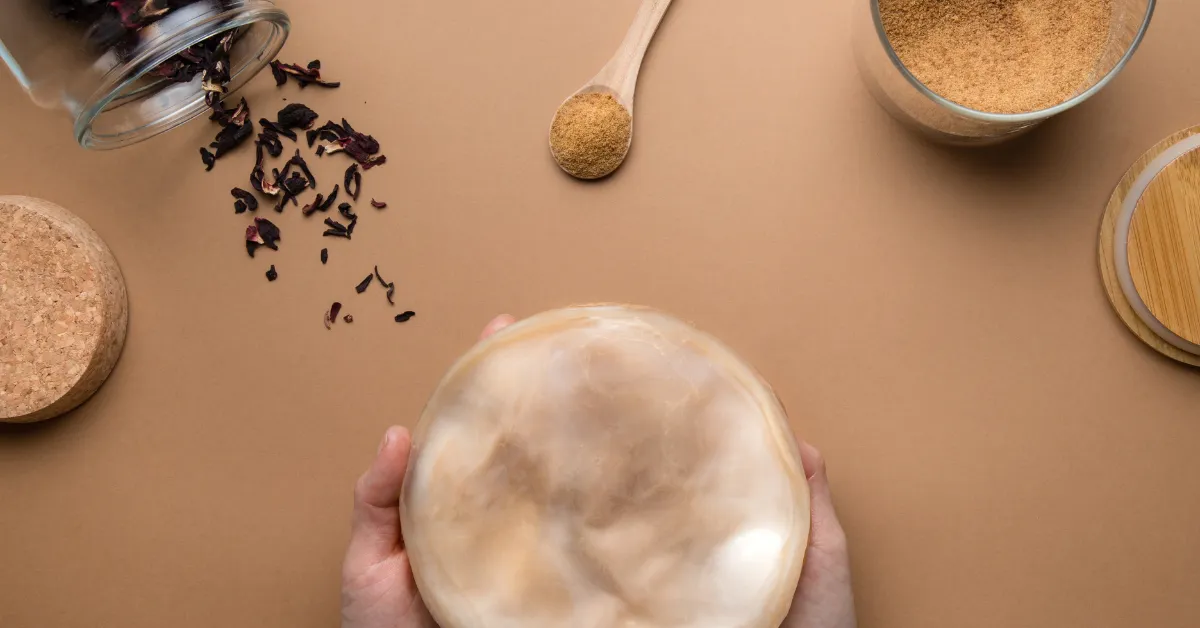
Kombucha is made from tea and sugar, which are allowed to undergo a natural fermentation process. During this process, the original mixture gradually changes and develops the characteristic qualities we know today.
The microorganisms involved in the fermentation convert some of the sugars into organic acids and other natural compounds. It is this very process that gives the beverage its characteristic taste and natural carbonation.
Although its production may sound complex, it actually relies on a few simple ingredients. What makes the difference is time—the longer the fermentation lasts, the more pronounced the acidity usually becomes, and the more the beverage’s flavor profile develops.
Its composition can vary depending on the recipe and production method. It typically contains polyphenols from tea, organic acids, natural enzymes, B-complex vitamins, trace elements, and small amounts of caffeine. The exact concentrations differ from product to product, which explains why two different kombuchas often do not taste exactly the same.
Many commercial kombucha drinks contain significantly less sugar than traditional soft drinks, while still offering natural flavor and a refreshing sensation.
The small amount of caffeine it contains can provide mild stimulation without the intense energy spikes often caused by energy drinks.
The reasons vary from person to person. Some are looking for an alternative to traditional soft drinks, while others enjoy the natural carbonation and refreshing sensation it offers.
Because it is made from tea, it naturally contains antioxidant compounds, while the small amount of caffeine it contains can provide a gentle boost throughout the day. Additionally, its connection to the fermentation process has contributed significantly to its popularity in recent years.
But beyond all that, many people choose it simply because they like its taste. There are quite a few who try kombucha out of curiosity and then start exploring new flavors and combinations.
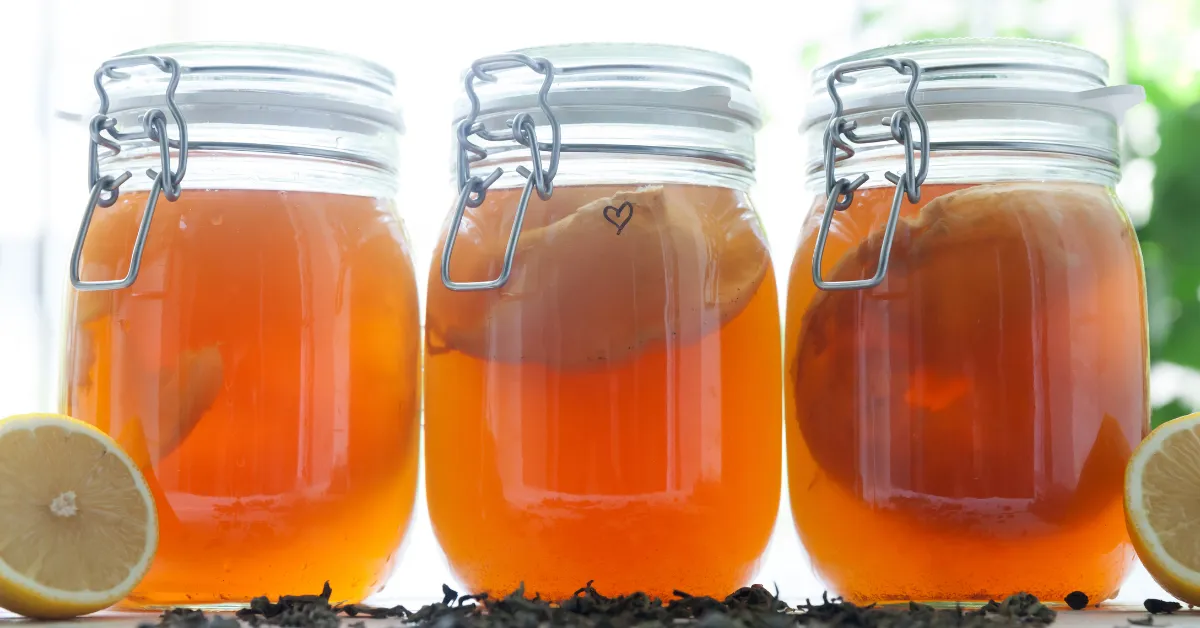
Kombucha is directly associated with tea because tea is the primary raw ingredient used to produce it. The process starts with green or black tea, which is then fermented and transformed into the unique beverage known as kombucha.
Although its final taste differs significantly from a classic cup of tea, kombucha retains many of the natural compounds and antioxidants found in tea. That’s why many describe kombucha as a “fermented tea” with a unique flavor, natural carbonation, and additional benefits derived from the fermentation process.
If there’s one question that is asked more than any other, it is: “What does kombucha taste like?”
Kombucha is hard to compare to any other beverage! Some people liken it to a fizzy iced tea, others to something slightly reminiscent of cider. In reality, though, it’s not exactly either of the two.
The first sensation is usually refreshing, with mild carbonation and a pleasant acidity. Depending on the recipe and the ingredients used, it can be more fruity, more aromatic, or more intense.
Today, there are many different versions available, ranging from classic options like Green Tea to more unique combinations such as Hibiscus, Ginger & Saffron, Chios Mastiha, or Mint. Each has its own character and offers a different experience.
There is no specific time to enjoy it. Some drink it in the morning, others with meals, and many choose it in the afternoon or after exercise instead of a soft drink. Especially when served chilled, it is an exceptionally refreshing choice, particularly during the hot months of the year.
If you’re thinking of trying it for the first time, start with a milder flavor!
Don’t try to compare it to any other beverage you already know. Kombucha has its own personality, and perhaps that’s one of the main reasons it keeps gaining new fans around the world!
Discover all the flavors of the most viral beverage here.
No account yet?
Create an AccountUnder EU law, you have the right to withdraw from your online purchase within 14 days. Please fill in the details below.
Your withdrawal request has been submitted successfully. You will receive a confirmation email shortly with further instructions.